
Top tips for knitting with Mohair
Mohair is a beautiful fibre —soft, floaty, and properly luxurious. But… it can also be a bit of a challenge to knit with (especially if you’re used to crisp stitch definition and easy frogging).
A knitter recently asked for advice because they were struggling with mohair, and for good reason. The very things that make mohair so beautiful—its long fibres and that dreamy halo—are also the things that can make it a bit tricksy.
So in today’s post, I’m sharing the key tips from my latest YouTube video on knitting with mohair, plus a few others practical suggestions to make for a more pleasurable experience.
Watch the video tutorial here:
Why mohair can be tricky
Mohair yarn is “floofy” because it consists of long fibres (from goats), which create that gorgeous soft halo. The core of the yarn can be quite fine, even though the yarn looks fluffy and substantial. That means it can feel odd to knit—like there’s not much “there” as you form stitches.
On top of that, those long fibres can:
snag on rough needle surfaces or dry hands (as I demonstrated in the video!)
obscure your stitches making it harder to “read” your knitting.
lock into each other when you try to unpick (frogging can get… frustrating)
It really is worth sticking with though, and with a few considerations you can have a much easier time knitting with it.
1) Use the right needle size
Because the fibres plump up and fill out the fabric, mohair is usually worked at a looser gauge than you’d use for a typical lace weight yarn. It’s very common to knit fine mohair on anything from around 3mm up to 5mm needles, depending on the yarn and the fabric you want.
It can feel weird to be using “big” needles with a fine yarn but that’s normal with mohair, and you’ll get used to it after a little while
2) Hand care
I really would take my own advice with this one!!
Because Mohair catches easily on any rough surfaces it’s a good idea to make sure your nails are smooth, and to moisturise your hands with a good hand cream before you start knitting . Apply a few minutes before you start so it has a chance to be absorbed into your skin - you don’t want to coat your yarn with it!
3) Choosing the best needles
Material:
Mohair’s halo can snag on anything even slightly rough, so your needle surface makes a difference.
What tends to work well:
Smooth metal needles
Well-polished wood/bamboo needles (the key is polished)
If your wooden needle has a noticeable grain, or feels a bit “grabby,” mohair fibres may catch on it.
Needle points - sharp v blunt
You’ll hear mixed opinions here. Some knitters love very pointy lace tips; others prefer something blunter.
My take: aim for a medium point—a tip that’s precise enough to “fossick” into the stitch, but not so sharp that it splits fibres (especially if you’re using a thicker weight mohair yarn).
4) Make stitch markers your best friends
Mohair can make it harder to see:
where your stitches are
whether you’re on the right row of a repeat
your exact stitch/row count when swatching
Stitch markers can really help you keep track of where you are as well as make swatching for gauge easier:
For stitch gauge: place markers apart by the number of sts you are trying to achieve over 10cm/4in. You can measure the distance between the markers to assess your gauge.
For row gauge: pop markers after at the start and end of the desired number of rows you are trying to achieve over 10cm/4in. Measure that interval to assess your gauge.
This makes swatching less of a squint-fest!
5) Keep stitch patterns simple
Mohair is beautiful all by itself so let it do the talking! Intricate cables or fussy stitch patterns can be:
harder to see clearly while knitting
harder to fix if you make an error
not that visible once the halo blooms anyway
A little texture can look lovely, but in general keep it simple to get the best out of this yarn - you’ll just be wasting your time otherwise.
6) Unpicking mohair: go slowly, and consider “tinking”
If you need to undo a few rows, mohair usually won’t tolerate a dramatic rip-back. Pull too fast and those fibres will lock together and create a scream inducing knot-of-doom!
Instead:
Take your time
Unknit stitch by stitch (“tink”) when you can
If you must frog, do it very gently, slowly and with patience
The freezer trick
Some knitters recommend popping your work (or yarn) in the freezer briefly to calm the fibres down before you frog. I haven’t tested it myself yet—if you have, tell me how you got on in the comments!
7) Don’t fret about slightly wonky stitches
Mohair can make perfectly even stitches feel… aspirational. But that halo is very concealing, and once your piece is blocked and relaxed, minor irregularities are much less noticeable.
So if you’re one of the many neat freaks among us, you’ll need to accept that achieving perfectly regular stitches is unrealistic and some wonkiness is inevitable with this type of yarn. You’ll need to come to terms with that, or choose a different yarn for that project! The following alternatives my be a good compromise.
8) Want the mohair look with less faff? Try these options
If full “floofamundo” feels a bit too much like hard work, or is not really your style, you’ve got choices:
Option A: Choose a mohair blend
A yarn with some mohair (rather than 100% airy halo) can be easier to handle while still giving softness and bloom.
Option B: Hold mohair with a smoother yarn
This is one of my favourite approaches: strand a fine mohair with something smoother (like merino). You still get the halo, but the smoother yarn gives the fabric more substance and makes the knitting feel more manageable.
Pattern spotlight: Birch Gilet
If you’re new to knitting with mohair, my Birch Gilet is a great first foray - it uses a mohair mix yarn which is double-stranded with fine mohair for the fronts so its an easy way into knitting with this fibre. There is some stitch interest, but with simpler areas where the mohair yarn is in play.
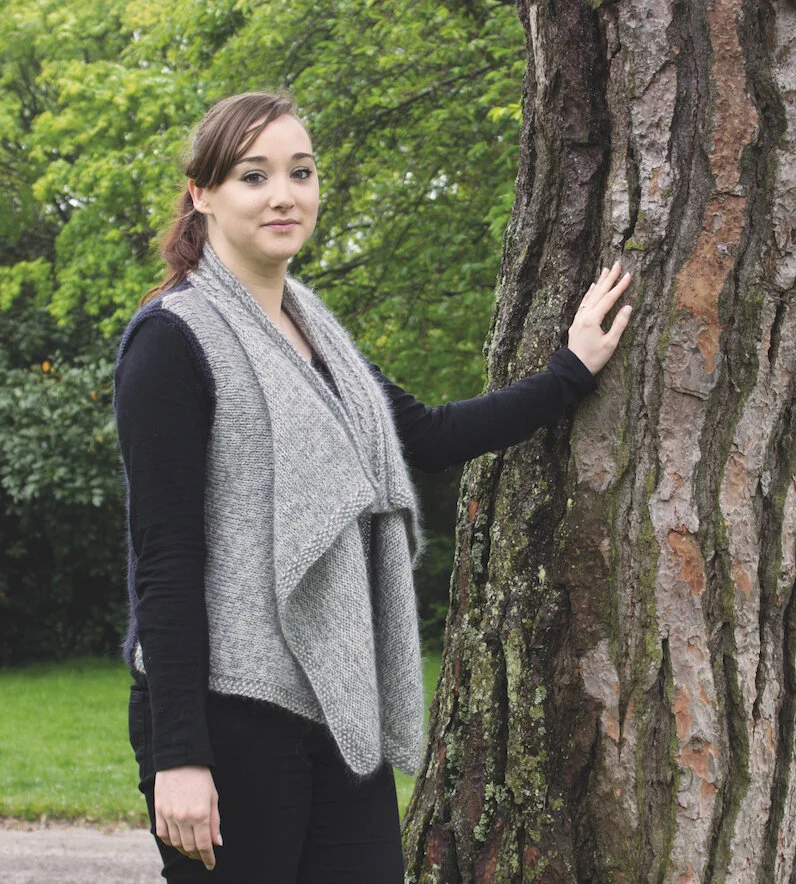
Birch Gilet
Learn more about it HERE
Pattern available via my Ravelry store:
Alternatively you can purchase any of my patterns via Lovecrafts
Final (and most important)tip: treat mohair as “slow luxury knitting”
Mohair won’t be rushed - and neither should you!! Take your time to enjoy every stitch with this glorious fibre. This type of knit is to be indulged in not endured. Go gently, keep it simple, and you’ll end up creating something truly special that you’ll treasure for years to come.
Over to you
Have you knitted with mohair before? If you have, I’d love to hear:
what’s your biggest mohair challenges?
do you have any other tips to share to make it easier to handle?
Happy creating!
If you've enjoyed reading this post, why not sign up below for news of further posts and updates?